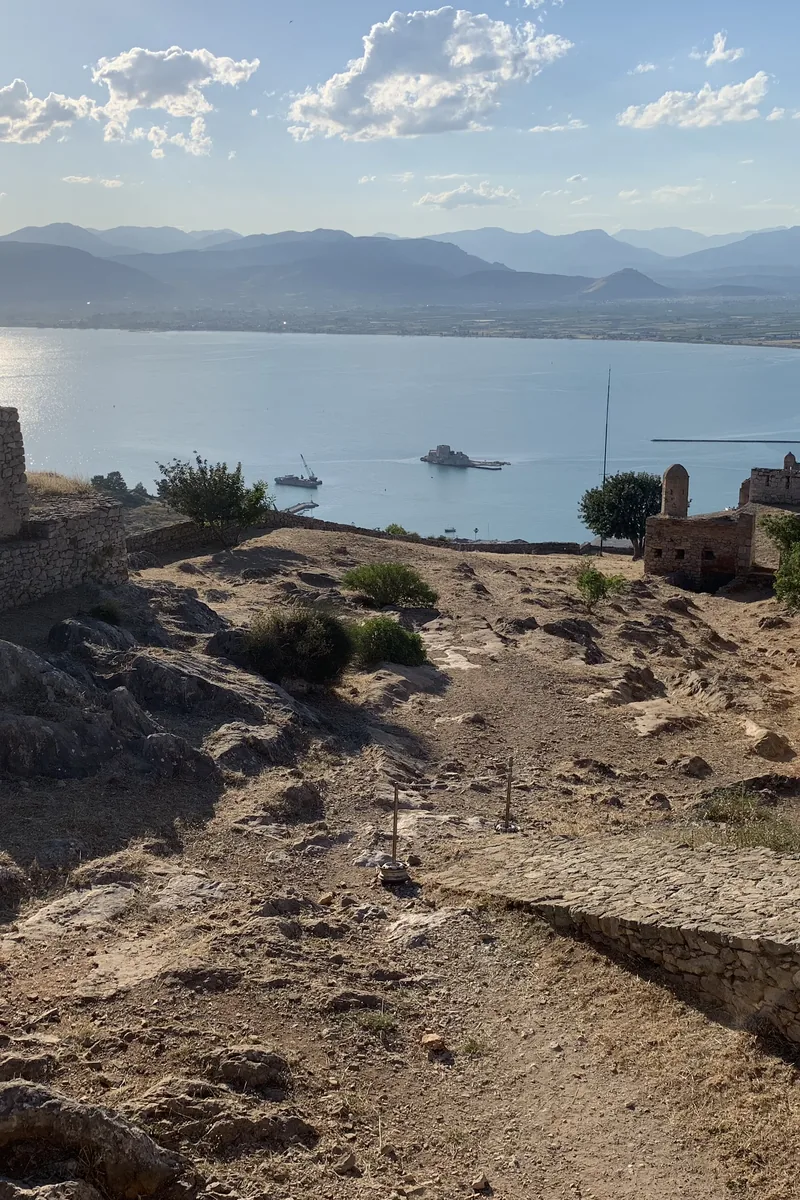
The bastions and ramparts of Palamidi fortress crowning the rock high above the town of Nafplio and the Argolic Gulf

Climb to the Venetian fortress that crowns the rock above Nafplio

Palamidi skip-the-line timed entry — the great early-18th-century Venetian citadel high above the seaside town, its eight bastions, ramparts and sweeping views over Nafplio, the Bourtzi islet and the Argolic Gulf. We reserve your dated hourly slot so you walk past the ticket-office queue straight to the gate.

See ticket options
  • 1711-14 Built by the Venetians
  • 8 Self-contained bastions
  • 216 m Above the Argolic Gulf
  • 999 Steps up from the old town

Choose your ticket

  • Book in your languageYour currency, final price.
  • Pro tips includedBest slots, whether to climb or drive, the bastions most visitors rush past.
  • Ready before you flyMobile ticket, ready in your inbox.
  • 24/7 human supportReal people, any hour, any time zone — 24/7, in your own language, right through to your visit day.
4.8 from 137 verified travellers
Sophie R.
Manchester, England
“We showed our phones at the gate and walked straight in while a coach group queued at the ticket office in the sun. The bastions are enormous, and the view down over Nafplio, the little Bourtzi in the harbour and the gulf beyond is breathtaking. The short audio history beforehand made every wall and gate make sense.”
May 2026
David M.
Sydney, Australia
“Booking and picking our hourly slot was so easy. We took an early slot to beat the heat, climbed the famous staircase, and had the ramparts almost to ourselves. Standing where Kolokotronis was held, looking out over the whole town, was a real highlight of our Peloponnese trip.”
April 2026
Anna L.
Hamburg, Germany
“The climb is no joke and the rock gets hot fast, so good shoes, a hat and water matter. Reserving our slot ahead meant no queuing in 33-degree heat. The chapel in the Agios Andreas bastion and the views were my favourites — go early and you'll love it.”
June 2026

Audio guide · 5-minute

Your 5-minute Palamidi pre-visit briefing

A short, calm narrative — the great Venetian fortress above Nafplio, the eight bastions raised in just three years, the chapel of Agios Andreas, the prison that held Kolokotronis, and what to look for as you walk the ramparts. Listen on the road to Nafplio or as you reach the gate.

Included with your booking — your full guide arrives with your ticket.Get your guide
  • 1711–1714 — the Venetians raise Palamidi in just three years, a masterpiece of military engineering
  • Eight self-contained bastions along the crest, each able to fight on if its neighbours fall
  • Agios Andreas — the central bastion of St Andrew, with its small chapel at the fortress's heart
  • 1715 — the fortress falls to the Ottomans barely a year after completion; later retaken in the War of Independence
  • The prison years — Theodoros Kolokotronis, hero of the Revolution, famously held in the bastions
  • Best timing: take the first or last hourly slot to beat the heat and the coach groups on the climb

Recorded for Palamidi Castle Tickets concierge. Free to download.

About Palamidi

Palamidi is the vast, superbly preserved Venetian fortress that crowns a rocky hill about 216 metres above the seaside town of Nafplio, in the Argolid region of the Peloponnese. It was built with remarkable speed by the Venetians between 1711 and 1714, at the end of their brief second rule over the Peloponnese, and it stands as a masterpiece of early-18th-century military engineering. Rather than a single castle, Palamidi was designed as a chain of eight self-contained, mutually defensible bastions, each able to hold out even if its neighbours fell, linked by walls, stairways and gates across the crest of the hill.

The fortress has a dramatic history. Barely a year after it was finished, in 1715, it fell to an Ottoman army, and it remained in Ottoman hands for most of the following century. During the Greek War of Independence it was taken by the Greek forces, and Nafplio went on to become the first capital of the newly independent Greek state. In the years that followed, the bastions of Palamidi were used as a prison, and it was here that Theodoros Kolokotronis, the celebrated hero of the Revolution, was famously held. The finest of the bastions, Agios Andreas — St Andrew — sits at the heart of the fortress and contains a small chapel, and from its ramparts the views over the old town, the Bourtzi islet in the harbour and the wide Argolic Gulf are unforgettable.

Palamidi rises directly above Nafplio, one of the most beautiful towns in Greece, with its Venetian and neoclassical old quarter, its waterfront and its two other fortresses, the Bourtzi on its islet and Acronauplia on the lower hill. You can reach the fortress either by road, which winds up to a car park near the upper gate, or by climbing the monumental staircase from the edge of the old town — popularly said to number 999 steps, though the true count is nearer 850 to 900. The rock is exposed and the climb is strenuous, so early-morning or late-afternoon hourly slots are far kinder than the middle of the day. Because entry is timed by the hour, we handle the ticketing in your own language and reserve the slot you want, so you can give your energy to the ramparts and the views instead of the queue.
Practical information

Opening hours
Open daily, year-round. Summer (roughly April–October) approx. 08:00–20:00; winter (November–March) shorter daytime hours, often around 08:30–17:00. Entry is timed by the hour and last entry is about 30 minutes before closing. Hours are set by the operator and change seasonally and on public holidays — confirm on the day of your visit.
Address
Palamidi Fortress, Nafplio 211 00, Argolida, Peloponnese, Greece.
Getting there
Palamidi rises directly above Nafplio, in the Argolid, about 140 km southwest of Athens. There is no train to Nafplio; intercity KTEL buses run from Athens to the Nafplio bus station, and by car it is roughly two to two and a half hours. From the old town you reach the fortress either on foot up the monumental staircase (popularly called the 999 steps) from near Arvanitia, or by the winding road up to the car park by the upper gate. The Bourtzi islet fortress in the harbour and the Acronauplia fortress on the lower hill are separate sites.
Accessibility
An open hilltop fortress with steep gradients, long flights of stone steps, ramps, uneven old stone paving and sheer drops. Sun exposure is high and shade is limited. The staircase from the old town is a strenuous climb; the road to the upper car park spares much of it, but the fortress itself still involves considerable walking on steps and slopes. Sturdy non-slip shoes, a hat and water are strongly recommended; visitors with limited mobility should arrive by road and note that many of the bastions are reached only by steps.
Bag policy
Day bags are fine. There is no large-luggage storage on site, so leave suitcases at your accommodation in Nafplio.
Photography
Personal photography is welcome across the fortress and the ramparts. Tripods, professional equipment and drones may require permission, and take care near the many unguarded edges and drops when framing a shot.

About our service

Palamidi Castle Tickets is an independent concierge service that helps international visitors reserve and receive their timed-entry tickets in English. We are not the fortress and we are not an official vendor — we purchase genuine entry tickets on your behalf from the Hellenic Ministry of Culture's official ticketing service, and our service fee is included in the price you see. If you prefer to buy directly, the operator's own ticket site is tickets.hh.gr.

Frequently asked

Is this a skip-the-line ticket?

Your hourly slot is reserved before you arrive, so you walk straight to the fortress gate instead of queuing at the Palamidi ticket office. On busy days that queue can take a while as tour groups and cruise coaches arrive in Nafplio, so coming with your ticket already in hand saves the wait in the sun after the climb or the drive up.

How does the timed entry work?

You choose the date and an hourly time slot, and your ticket is valid for a single entry during that hour on that day. Just arrive within your slot window and show your mobile ticket at the gate; last entry is about 30 minutes before closing.

What's included in the ticket?

Full admission to the Palamidi fortress — the eight bastions across the crest of the hill, the central bastion and chapel of Agios Andreas, the connecting walls, stairways and gates, and the ramparts with their sweeping views over Nafplio, the Bourtzi islet and the Argolic Gulf. It is entry to the fortress itself; the Bourtzi on its islet and the Acronauplia fortress on the lower hill are separate sites.

Do I have to climb the 999 steps?

No. The famous staircase from the edge of the old town — popularly called the 999 steps, though the real count is nearer 850 to 900 — is the classic and most dramatic way up, but you can also reach Palamidi by the road that winds to a car park near the upper gate, which spares most of the climb. Many visitors climb up and take a taxi down, or drive up and walk the steps down; either way there is still walking on steps and slopes inside the fortress.

How and when do I get my ticket?

We send your ticket to your email as a mobile ticket once your booking is confirmed — there's nothing to print, just show it on your phone at the gate. You'll also receive a short 5-minute audio history to listen to before you go.

How do I get to Palamidi and Nafplio from Athens?

Palamidi rises above Nafplio, about 140 km southwest of Athens in the Argolid. There is no train to Nafplio, but frequent intercity KTEL buses run from Athens to the Nafplio bus station in around two and a half hours, and by car it is roughly two to two and a half hours. From the old town you reach the fortress on foot up the staircase or by the winding road to the upper car park.

Who built Palamidi, and why is Kolokotronis linked to it?

Palamidi was built by the Venetians between 1711 and 1714 as a state-of-the-art fortress of eight bastions. After independence, its bastions were used as a prison, and the hero of the Greek Revolution, Theodoros Kolokotronis, was famously held here — one of the bastions is popularly associated with his imprisonment, adding a powerful chapter of modern Greek history to the Venetian walls.

When is the best time to visit?

Book the first hourly slot after opening, or one of the last slots before closing, and travel outside the July–August peak if you can. The fortress is high, rocky and largely unshaded, so the middle of a summer day is both the hottest and the busiest stretch, when day-trip coaches and cruise groups overlap. An early or late slot gives cooler air, softer light on the bastions and a calmer walk along the ramparts.

How long should I allow for the visit?

Most visitors spend about 1.5 to 2 hours at Palamidi, walking the bastions, the chapel of Agios Andreas and the ramparts, plus the time to get up and down. Add the climb up or down the staircase, and allow a longer, unhurried outing, especially in the heat. The views reward lingering, so budget a little extra if you can.

Do I need to bring my passport or any ID?

No. The standard entry ticket is not personalised and needs no passport or name — just show your mobile ticket at the gate. (Reduced and free-entry categories set by the operator may require ID at the gate; our ticket is standard full admission.)

Is the fortress wheelchair accessible?

Only partly. Palamidi is a steep hilltop fortress with long flights of steps, ramps, uneven paving and sheer drops, so it is challenging for visitors with limited mobility. Arriving by the road to the upper car park avoids the staircase and gives access to part of the fortress, but many of the bastions are reached only by steps. Sturdy footwear and care near the edges are essential.

Is Palamidi open all year?

Yes — the fortress is open daily, year-round. Only the daily hours change with the season: longer in summer (roughly 08:00–20:00) and shorter in winter, with timed entry by the hour and last entry about 30 minutes before closing. Hours can change on public holidays, so confirm on the day.

Can I change my slot after booking?

Changes are allowed up to 2 hours before your visit, with a maximum of 2 changes per ticket, provided your preferred new slot is still open. If your plans shift, contact our team and we'll help where the operator's rules allow. See our terms for the full policy.

Can I get a refund?

All bookings are final once confirmed; we only issue a refund in the rare event the operator cannot honour a validly issued ticket. Timed-entry tickets are non-refundable, but you can change your slot up to 2 hours before your visit within the operator's rules. See our terms for details.

Are you the official Palamidi ticket office?

No. We're an independent concierge service for international visitors. We buy genuine tickets on your behalf from the Hellenic Ministry of Culture's official ticketing service and handle the booking in your own language, and our service fee is included in the price shown. You can always buy directly from the operator if you prefer.

What currency am I charged in?

The price you see is the price you pay — we show it in your local currency where we can and charge exactly that amount, with no surprise fees at checkout. Payment is by card on a secure page.

Why book with you instead of buying at the gate?

Two reasons: you skip the on-the-day queue by reserving your hourly slot in advance, and you get it all handled with 24/7 human support and a pre-visit audio history. Our service fee is included in the price — there are no extras at checkout.